Attack on Titan: A Masterpiece of Dark Fantasy
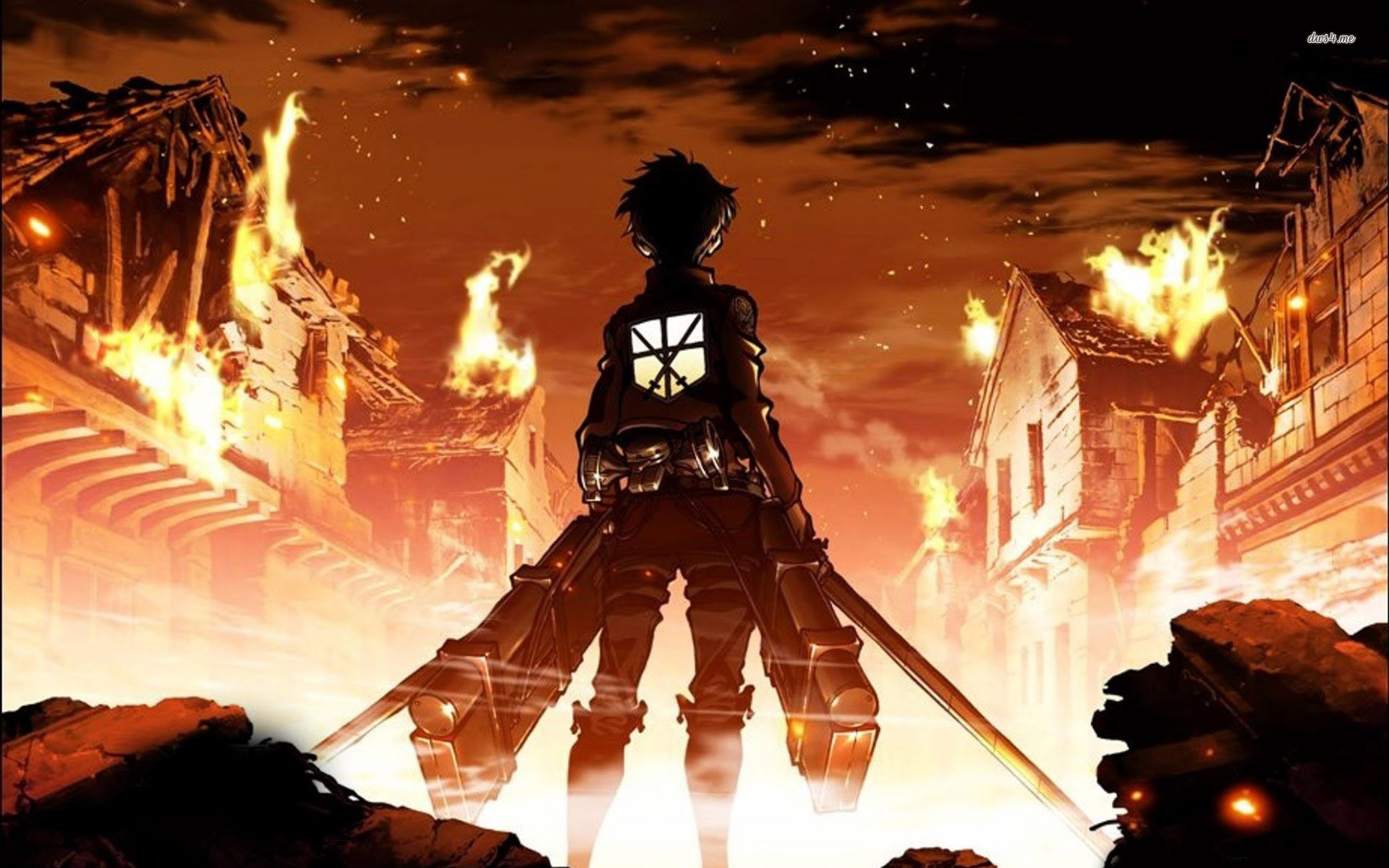
The Epic Saga of Humanity’s Survival
Attack on Titan (Shingeki no Kyojin) stands as one of the most groundbreaking and influential anime series of the 21st century. Based on the manga by Hajime Isayama, this dark fantasy epic has captivated audiences worldwide with its intense storytelling, complex characters, and stunning animation. From its shocking premiere to its controversial finale, Attack on Titan has redefined what anime can achieve as a medium.
The Premise: A World Under Siege
Attack on Titan begins with a simple yet compelling premise:
- Post-Apocalyptic Setting: Humanity lives within walled cities to protect themselves from giant humanoid creatures known as Titans
- The Fall of Wall Maria: The series opens with the sudden appearance of a colossal Titan that breaches the outermost wall, allowing Titans to rampage through the city
- Personal Stakes: Protagonist Eren Yeager witnesses his mother’s brutal death at the hands of a Titan, fueling his desire for vengeance
- Military Recruitment: Eren, his adoptive sister Mikasa Ackerman, and their friend Armin Arlert join the military to fight against the Titans
- Mystery Elements: As the story progresses, secrets about the Titans’ origins and the world beyond the walls are revealed
This initial premise sets the stage for a much larger and more complex narrative that unfolds over the course of the series.
The Characters: Complexity and Development
One of Attack on Titan’s greatest strengths is its rich cast of complex, well-developed characters:
- Eren Yeager: Evolves from a hot-headed youth driven by vengeance to a more nuanced character grappling with enormous responsibility
- Mikasa Ackerman: A skilled warrior with a mysterious past, fiercely protective of Eren
- Armin Arlert: Initially timid but possessing a brilliant strategic mind that becomes crucial to humanity’s survival
- Levi Ackerman: The captain of the Survey Corps’ Special Operations Squad, known as humanity’s strongest soldier
- Erwin Smith: The charismatic commander of the Survey Corps, willing to make difficult sacrifices for the greater good
- Reiner Braun, Annie Leonhart, and Bertolt Hoover: Three soldiers with secret identities that dramatically alter the course of the story
These characters and many others undergo significant development throughout the series, making their journeys and fates deeply compelling.
The Animation: Visual Spectacle and Technical Excellence
Attack on Titan is renowned for its exceptional animation quality:
- Studio Wit’s Work: The first three seasons, produced by Wit Studio, feature fluid animation and stunning action sequences
- MAPPA’s Take: The final season, produced by MAPPA, maintains high quality with a slightly different visual style
- 3D Maneuver Gear: The animation of the soldiers’ omni-directional mobility gear is particularly impressive, creating dynamic, thrilling action scenes
- Titan Designs: The Titans are designed to be simultaneously terrifying and fascinating
- Art Direction: The series features detailed backgrounds that create a sense of scale and immerse viewers in its world
- Color Palette: Uses color effectively to create mood, with desaturated tones during tragic moments and vibrant colors during key emotional beats
The animation quality remains consistently high throughout the series, enhancing the storytelling and emotional impact.
The Story: Twists, Turns, and Moral Complexity
Attack on Titan is known for its intricate plotting and narrative depth:
- Mystery Unfolding: The series gradually reveals the secrets of the Titans, the walls, and the world beyond
- Genre Evolution: Evolves from a simple survival story to a complex political thriller with elements of horror, drama, and tragedy
- Plot Twists: Features numerous shocking plot twists that dramatically alter the viewer’s understanding of the story
- Moral Ambiguity: Challenges viewers’ perceptions of good and evil, with characters forced to make difficult moral choices
- Themes of War: Explores the horrors and complexities of war, including propaganda, discrimination, and the cycle of violence
- Philosophical Depth: Raises questions about freedom, identity, and the nature of humanity
The storytelling is ambitious in scope, with plot threads weaving together across multiple seasons to create a cohesive narrative tapestry.
The Music: Emotional Resonance and Epic Scope
The music of Attack on Titan plays a crucial role in its impact:
- Hiroyuki Sawano’s Score: Composer Hiroyuki Sawano creates a distinctive, epic soundtrack that ranges from hauntingly beautiful to thunderously intense
- Opening Themes: Features memorable opening themes that have become iconic, including “Guren no Yumiya” and “Shinzou wo Sasageyo”
- Emotional Cues: Music that perfectly complements the emotional tone of each scene, whether it’s terror, triumph, or tragedy
- Cultural Impact: The soundtrack has gained popularity independently of the series, with concerts dedicated to its performance
- Narrative Enhancement: Music that helps to build tension, highlight key moments, and underscore the series’ themes
The music of Attack on Titan is as much a part of its identity as its visual style and storytelling.
The Impact: Cultural Phenomenon and Critical Acclaim
Attack on Titan has had a profound impact on the anime industry and popular culture:
- Global Popularity: Has gained a massive international following, transcending cultural boundaries
- Critical Acclaim: Received widespread critical acclaim for its storytelling, animation, and thematic depth
- Influence on Anime: Has influenced numerous subsequent anime series in terms of storytelling ambition and visual style
- Mainstream Recognition: Brought new audiences to anime and helped to legitimize the medium in mainstream culture
- Merchandising Success: Spawned a vast array of merchandise, from action figures to clothing
- Adaptations: Inspired a live-action film series, video games, and other spin-off media
Attack on Titan has become a cultural phenomenon that has left an indelible mark on the anime landscape.
The Controversies: Bold Choices and Divisive Moments
Attack on Titan has not been without its controversies:
- Violence and Gore: The series’ graphic violence has been a subject of debate
- Political Interpretations: Some have drawn political parallels from the series, leading to discussions about its themes
- The Final Arc: The manga’s final arc and the anime’s adaptation of it have been divisive among fans
- Ethical Dilemmas: The series’ exploration of difficult ethical dilemmas has sparked intense debate
- Character Decisions: Certain character choices and developments have polarized audiences
These controversies, while sometimes heated, are a testament to the series’ ability to provoke thought and emotional responses.
The Legacy: A Modern Classic
As Attack on Titan concluded with its final season, its legacy is already secure:
- Narrative Ambition: Demonstrated that anime can tackle complex, mature stories with the same depth as live-action television and film
- Technical Achievement: Set new standards for animation quality and action choreography
- Character Writing: Created some of the most memorable and complex characters in anime history
- Thematic Resonance: Explored profound themes that continue to resonate with audiences
- Cultural Impact: Helped to expand anime’s global reach and acceptance
- Influence on Creators: Inspired a new generation of anime creators and storytellers
Attack on Titan has earned its place as a modern classic of the medium, and its influence will be felt for years to come.
Why You Should Watch Attack on Titan
Attack on Titan is essential viewing for any anime fan or anyone interested in compelling storytelling:
- Engaging Plot: A gripping narrative that constantly evolves and surprises
- Complex Characters: Well-developed characters with realistic motivations and flaws
- Stunning Animation: Some of the most impressive animation in television anime
- Emotional Depth: Moments of intense emotion that will stay with you long after viewing
- Thematic Richness: Thought-provoking themes that invite discussion and analysis
- Cultural Significance: A series that has left an indelible mark on popular culture
Whether you’re a longtime anime fan or new to the medium, Attack on Titan offers an experience that is not to be missed.
Conclusion
Attack on Titan is more than just an anime series—it’s a cultural phenomenon that has redefined what the medium is capable of. From its humble beginnings as a dark fantasy about humanity’s struggle against giant monsters, it evolved into a complex, multi-layered narrative that explores the depths of human nature, the horrors of war, and the meaning of freedom.
The series’ combination of stunning animation, complex characters, and ambitious storytelling has captivated audiences worldwide and earned it a place among the greatest anime of all time. While its violence and mature themes may not be for everyone, those who embrace its dark vision will find a deeply rewarding experience.
As we reflect on the complete saga of Attack on Titan, it’s clear that Hajime Isayama and the teams at Wit Studio and MAPPA have created something truly special. A series that will be remembered not just for its thrilling action and shocking twists, but for its profound exploration of what it means to be human in a world filled with suffering and uncertainty.
Attack on Titan is a masterpiece of storytelling that transcends its medium, leaving an indelible mark on all who experience it.